The Story Behind the Lines
The Art of the
Imperfect Line
Silkline Studio exists at the quiet intersection of ancient Japanese aesthetics and the flowing cadence of European Art Nouveau — a place where slowing down is not a luxury, but a method.
The Tool
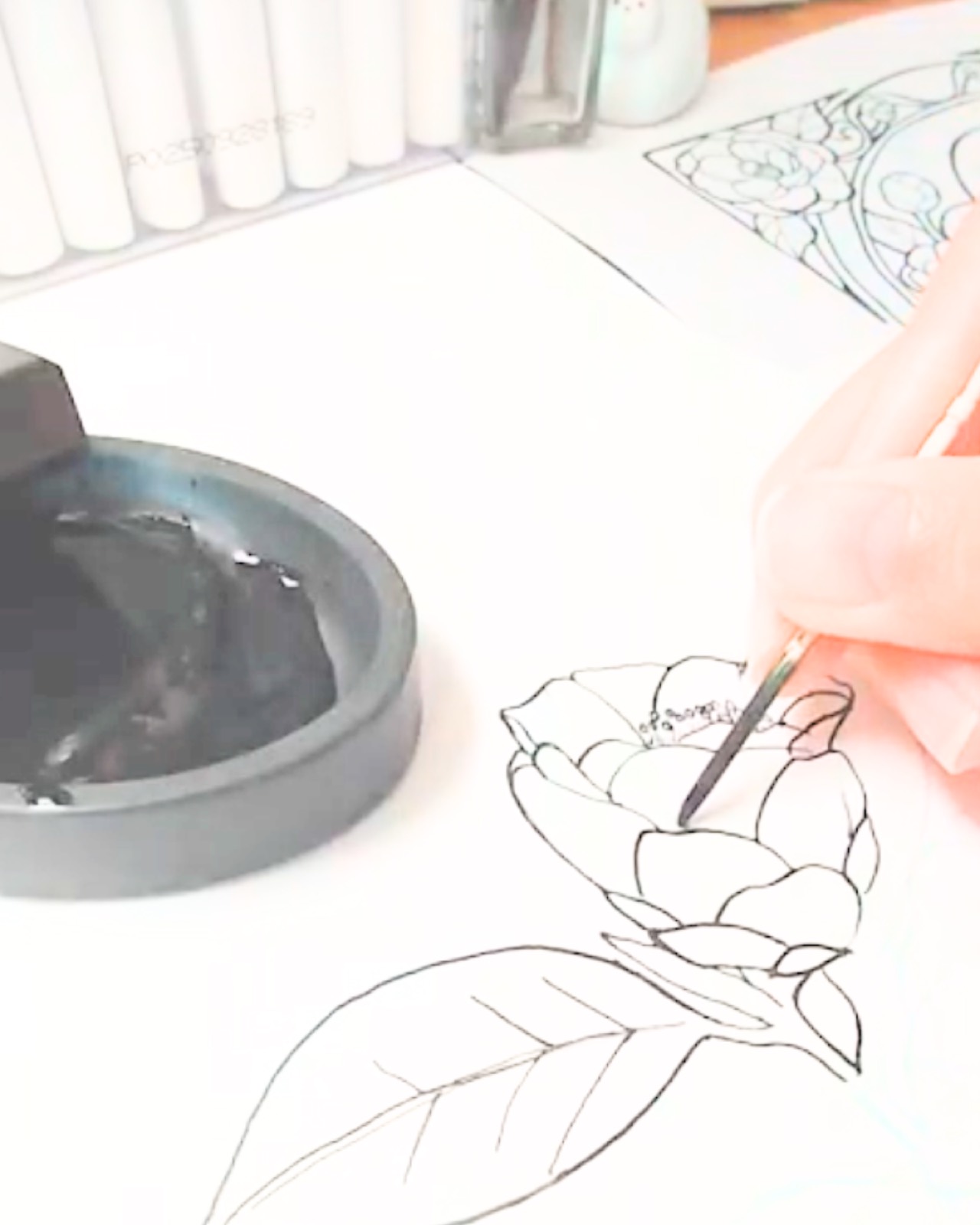
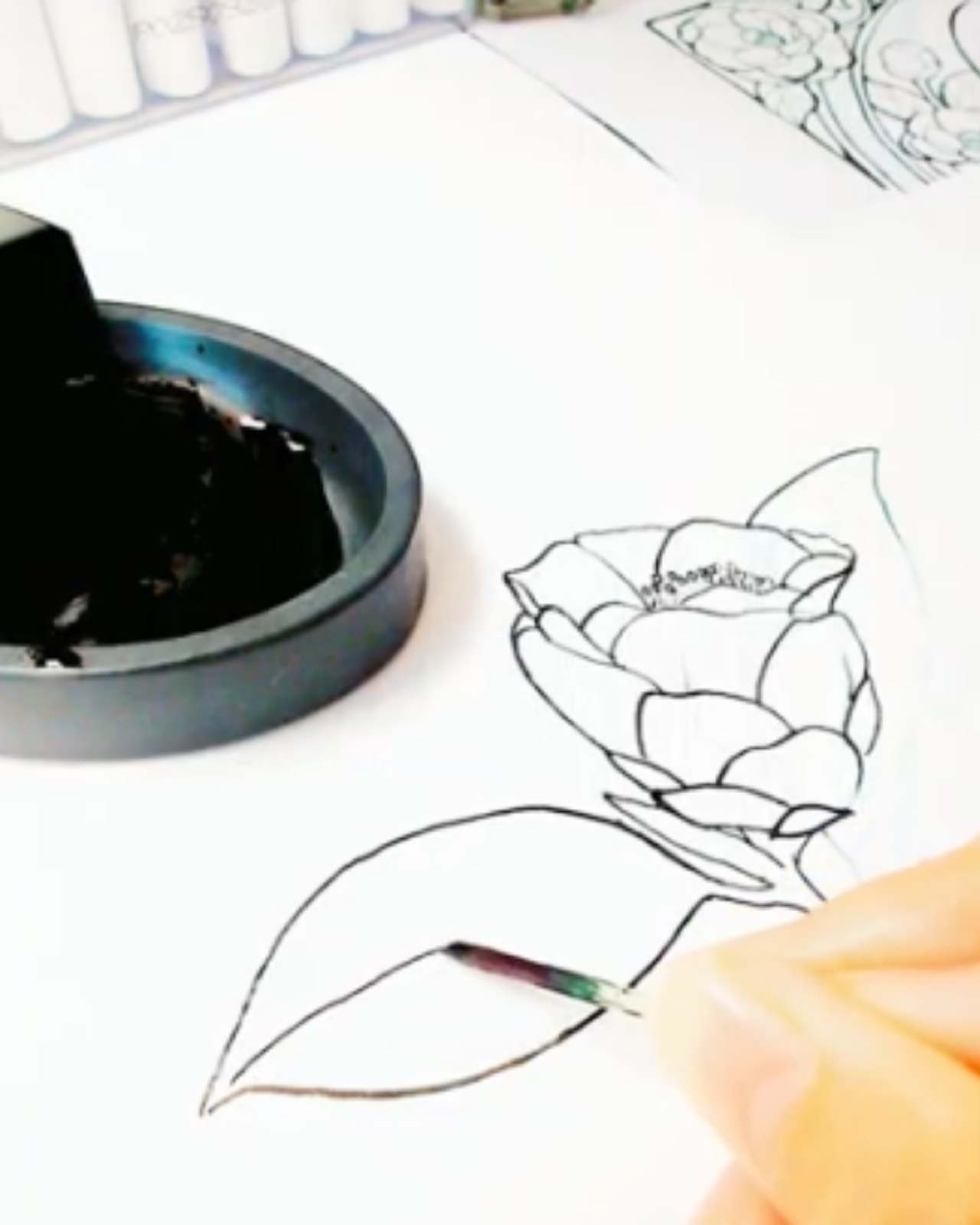
Every single line originates from the same humble instrument: a plain wooden toothpick, dipped in traditional Sumi ink. No stylus, no tablet, no algorithm. The unpredictability of the tool is precisely the point — it demands presence, patience, and surrender.
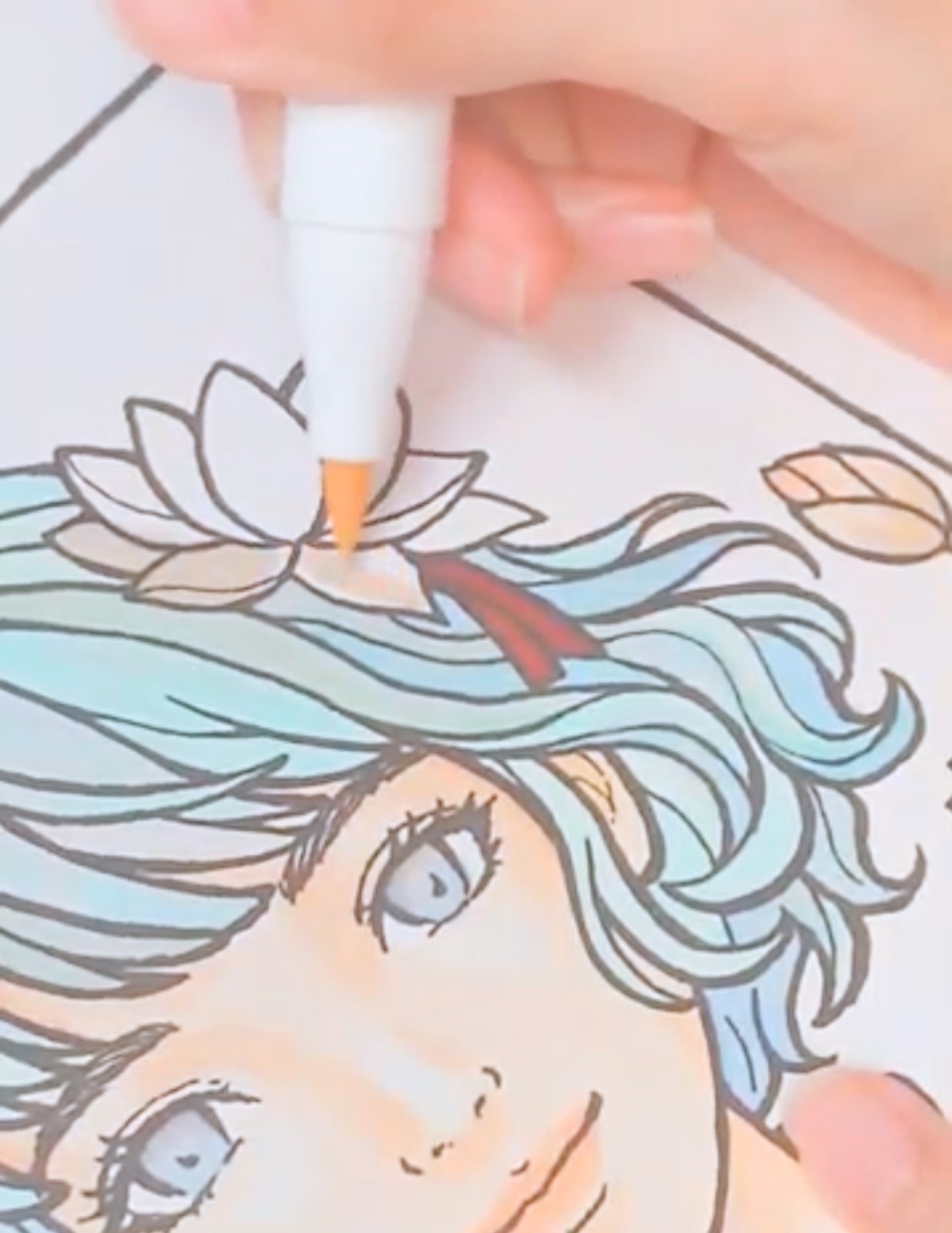
Worked this way, the ink behaves as it will. It pools and thins, gathers and trails off — closer to the unhurried spirit of suiboku ink painting than to any clean, even line. The marks are bold, a little heavy, never quite uniform. They are not made to be admired on their own, but simply to be lived with — and, perhaps, to make the laying down of color feel a little more like play.
The Inspiration
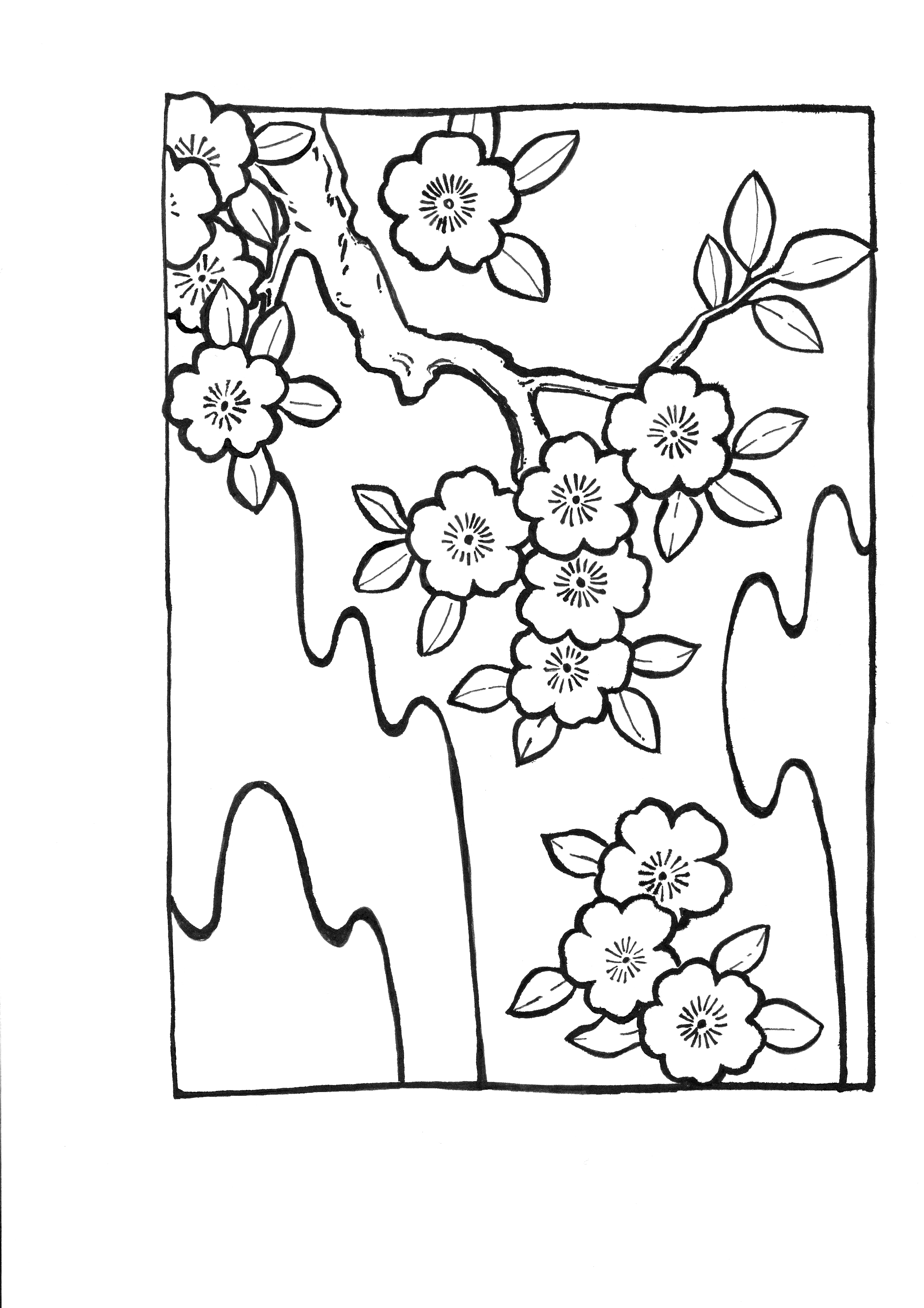
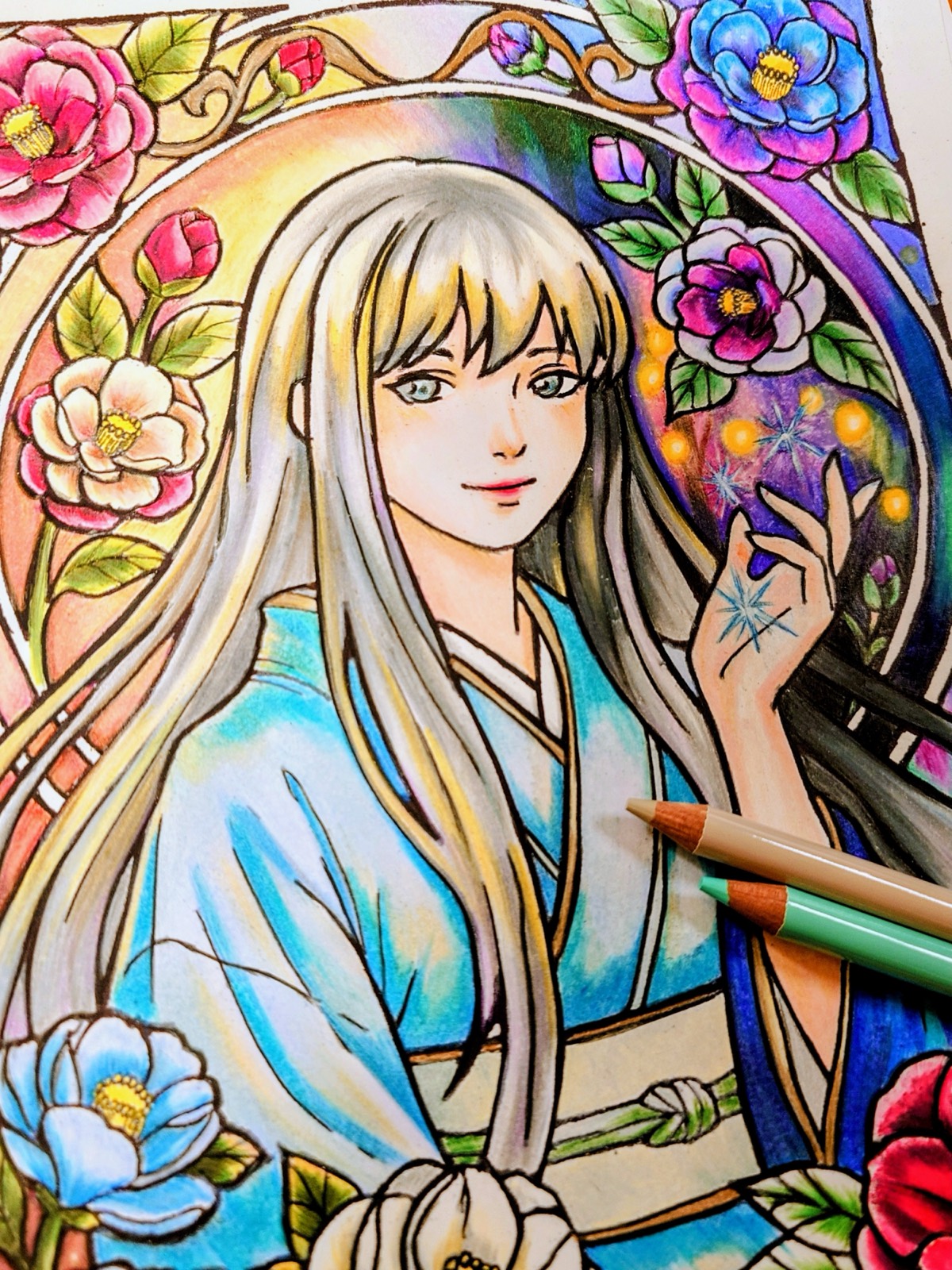
Silkline Studio draws from the visual archives of Ukiyo-e — the "floating world" of Edo-period woodblock masters — and fuses their flat, rhythmic compositions with the organic, swirling lines of Western Art Nouveau. The result belongs wholly to neither tradition.
The Philosophy
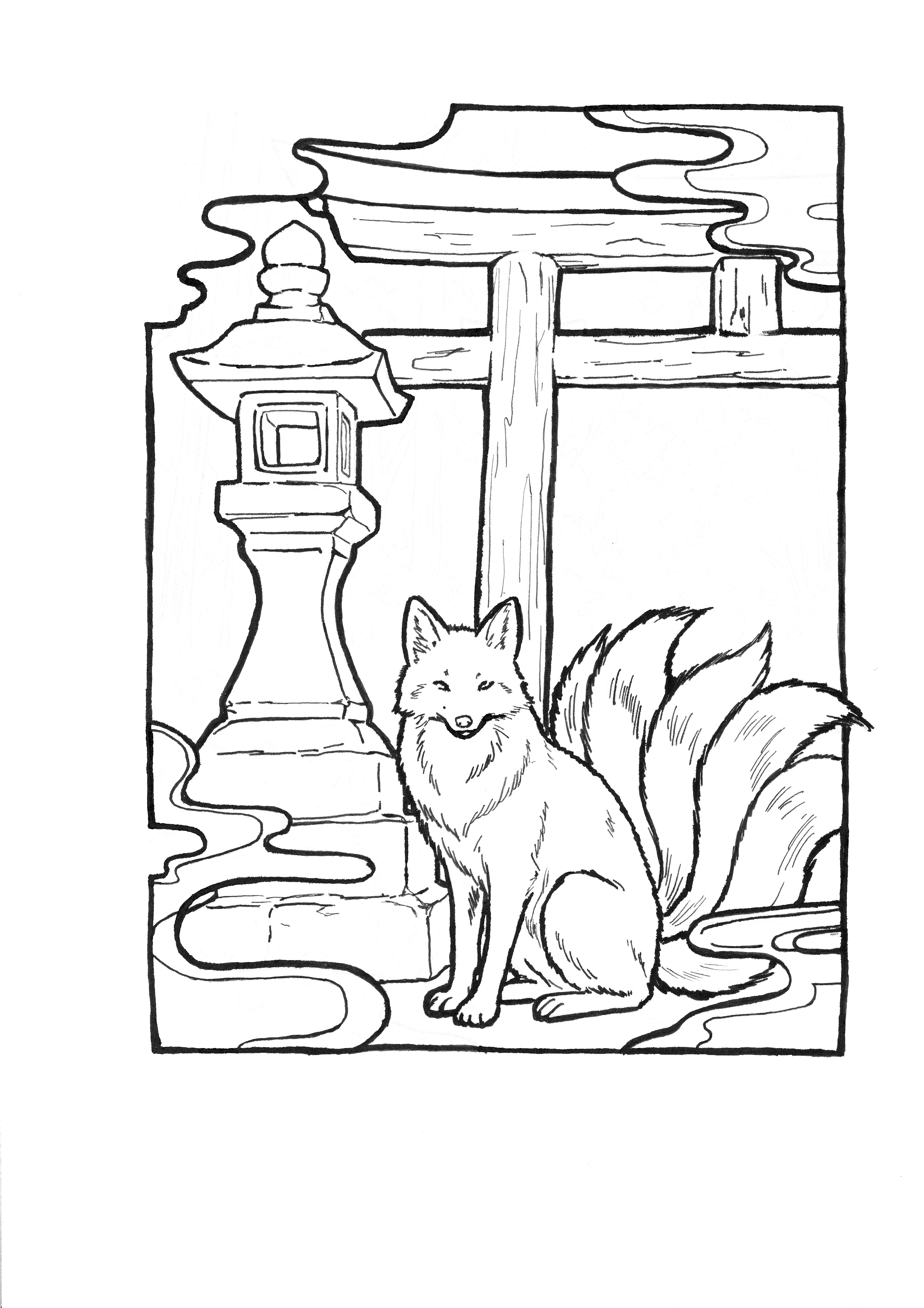
Wabi-Sabi — the Japanese acceptance of transience and imperfection — is not an aesthetic choice here. It is the foundation. The purposefully bold, slightly uneven lines are an open invitation: a coloring experience need not be perfect to be beautiful.
From line to color
A single line. A little color.
A quiet afternoon.
A Shared Lineage
A Circle Between
East and West
These two traditions have long admired one another.
In the late 1800s, Japanese woodblock prints traveled to Paris, where artists of the emerging Art Nouveau movement found kinship in their flowing contours, their flat planes of color, their love of empty space. It was a meeting of two sensibilities that already shared a quiet reverence for nature and line.
A century later, that same current is often said to have flowed back across the sea — its grace echoing, in Japan, through the decorative panels and luminous eyes of shōjo manga.
Silkline Studio's line is drawn from this gentle circle — East and West, admiring and inspiring one another across a century. Not one tradition or the other, but the meeting point between them.
Manifesto
Made with
Deliberate Slowness
"Silkline Studio does not make books quickly.
It makes them honestly."
In an era of machine-generated imagery and instant proliferation, Silkline Studio makes a quiet, resolute counter-argument. Every illustration begins as a blank page and a single wooden toothpick. What emerges from that friction — the slight resistance of paper against wood, the spreading bloom of Sumi ink — cannot be replicated by any software.
The visual language is drawn from those same two traditions: the serene compositional mastery of Japanese Ukiyo-e woodblock printing, with its confident negative space and lyrical attention to the natural world, and the sinuous, botanical energy of Western Art Nouveau, where line becomes ornament and ornament becomes meaning.
The philosophy that binds them is Wabi-Sabi. The marks left by the toothpick are intentionally bold and unapologetically human — an antidote to perfection paralysis. These pages are designed to be held, colored, and loved. Not merely admired from a careful distance.
"The line that trembles slightly
is the line that breathes."
Silkline Studio is an independent creative practice releasing books in small, considered editions. Each title in the series carries its own mythological weight — drawn from the folklore, historical archives, and visual culture of Japan, retold through ink and silence.